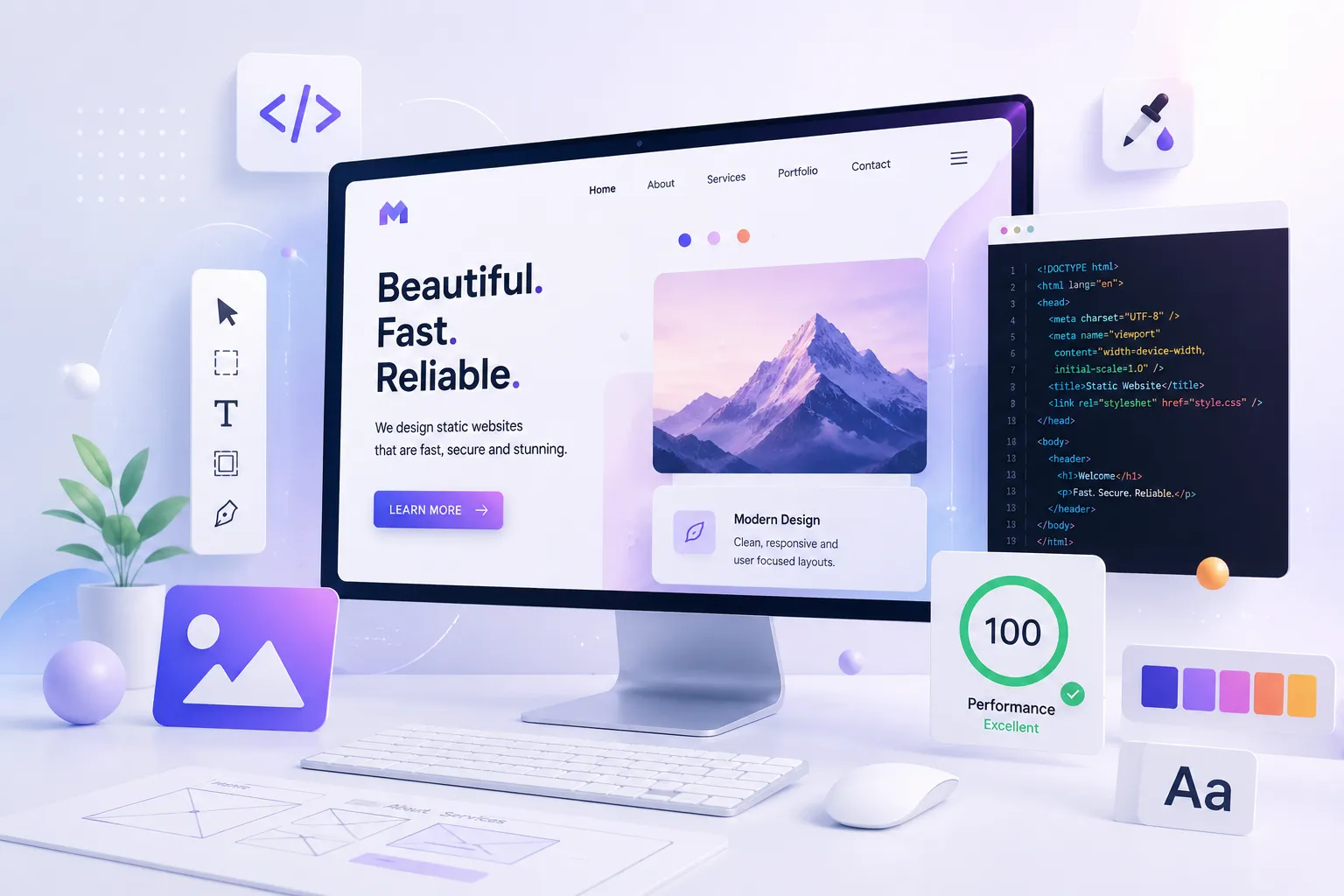
Static web designing is one of the most reliable and performance-driven approaches to building a strong online presence. It involves creating websites with fixed content, where each page is coded using technologies like HTML, CSS, and sometimes lightweight JavaScript. Unlike dynamic websites that rely on databases and server-side processing, static websites deliver pre-built pages directly to users, resulting in faster loading speeds, enhanced security, and a seamless user experience.
In today’s competitive digital landscape, website speed and performance are critical factors for both user engagement and search engine rankings. Static websites are known for their exceptional speed because they do not require server-side processing or database queries. This allows pages to load almost instantly, which significantly reduces bounce rates and improves overall user satisfaction. Search engines like Google prioritize fast-loading websites, making static web design an excellent choice for businesses aiming to improve their SEO performance.
One of the key advantages of static web designing is its simplicity and reliability. Since the content is fixed, there are fewer chances of errors, bugs, or vulnerabilities compared to dynamic websites. This makes static websites highly secure, as they are less prone to hacking attempts and cyber threats. Businesses that prioritize security, such as startups, small enterprises, and personal brands, often choose static websites to ensure a safe and stable online presence.
Static web design is also highly cost-effective. Without the need for complex backend development or database management, development and hosting costs are significantly lower. Maintenance is minimal, making it an ideal solution for businesses that do not require frequent content updates. This allows companies to focus on their core operations while maintaining a professional and optimized website.
From an SEO perspective, static websites offer several benefits. Clean code structure, faster loading speeds, and optimized design contribute to better crawlability and indexing by search engines. Developers can easily implement on-page SEO elements such as meta tags, header tags, alt attributes, and structured content, ensuring that the website is fully optimized for search engine visibility. Additionally, static websites are highly compatible with modern SEO practices, including mobile responsiveness and Core Web Vitals optimization.
Another significant advantage of static web designing is its flexibility in design and customization. Designers can create visually stunning layouts tailored to a brand’s identity without being restricted by backend limitations. Whether it’s a business website, landing page, portfolio, or informational site, static web design allows complete creative control to deliver a unique and engaging user experience.
Static websites are particularly suitable for businesses that need a professional online presence without frequent content changes. Industries such as consulting firms, agencies, freelancers, and local businesses often benefit from static websites due to their simplicity and effectiveness. These websites can showcase services, highlight portfolios, and provide essential information in a clear and structured manner.
In addition to performance and security, static websites are highly scalable when combined with modern hosting solutions such as Content Delivery Networks (CDNs). By distributing website content across multiple servers worldwide, static websites can deliver consistent performance regardless of user location. This ensures a smooth browsing experience for global audiences and further improves SEO rankings.
User experience plays a crucial role in website success, and static web design excels in this area. With faster loading times, intuitive navigation, and responsive design, users can easily access information without delays or interruptions. A well-designed static website not only attracts visitors but also encourages them to stay longer, explore content, and take desired actions such as contacting the business or making inquiries.
Moreover, static web designing supports mobile-first design principles, which are essential in today’s mobile-driven world. With a majority of users accessing websites through smartphones and tablets, having a responsive and mobile-friendly website is crucial. Static websites can be optimized for all screen sizes, ensuring a consistent and user-friendly experience across devices.
At its core, static web designing is about delivering efficiency, performance, and simplicity. It eliminates unnecessary complexities while focusing on what truly matters—providing users with valuable content and a smooth browsing experience. Businesses that invest in static web design can benefit from improved website speed, enhanced security, better SEO rankings, and a strong online presence.
In conclusion, static web designing is an ideal solution for businesses looking to establish a reliable and high-performing website. With its advantages in speed, security, cost-effectiveness, and SEO optimization, it continues to be a preferred choice for many organizations. Whether you are a startup, a small business, or an established brand, a well-designed static website can help you build credibility, attract more visitors, and achieve your digital marketing goals effectively.